Moving During Work Breaks: Why Five Minutes Is Enough
The damage from a desk job is not dramatic. It is a slow accumulation of hours spent in one position, and it is undone in the same small increments it builds up in.
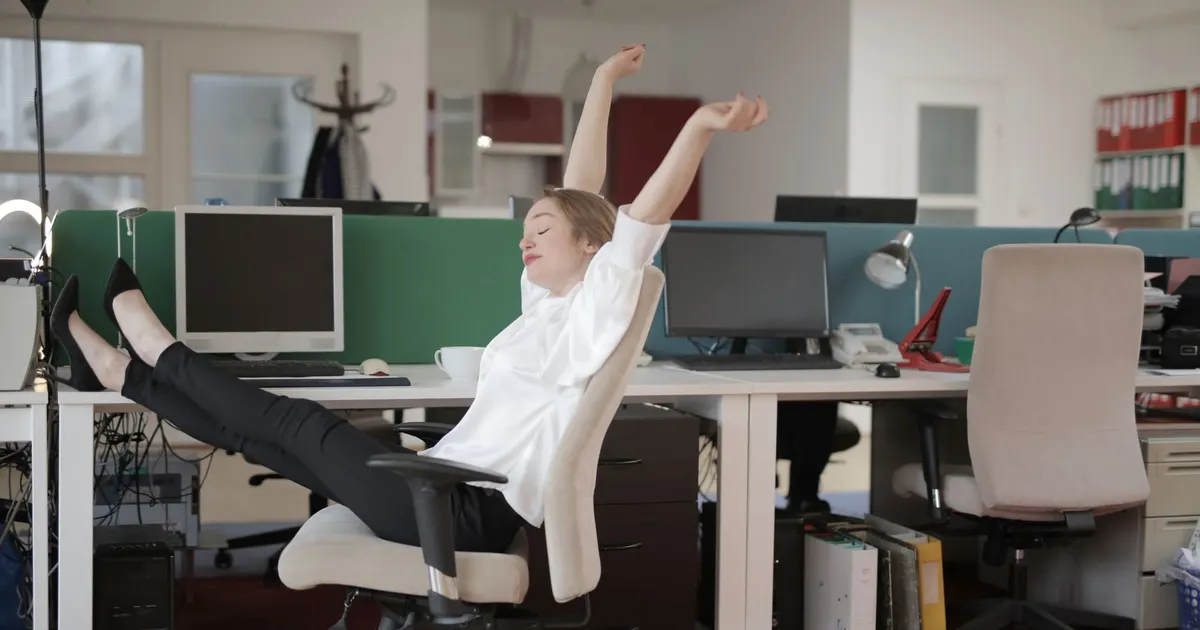
Most advice about sitting too much jumps straight to alarming claims — sitting is the new smoking, hours of stillness are silently killing you. The honest version is less dramatic: prolonged sitting is associated with worse circulation, stiffer joints, more back and neck complaints, and slightly worse blood sugar control. None of that is a health emergency in a single afternoon. It is a slow tax that adds up over years of exactly this schedule.
The good news is that the fix is not proportional to the problem. You do not need to reverse eight sitting hours with one intense hour of exercise. You need to interrupt the sitting itself, regularly, in small doses.
Exercise and movement are not the same thing
"Exercise" implies a session: changing clothes, breaking a sweat, a warm-up and a cool-down. That framing is exactly why people skip the workday version entirely — nobody wants to do that between two meetings. Movement is a lower bar and a more useful one here. It just means the body changes position and works a little, for a short window, without needing to look or feel like a workout.
This distinction matters because it removes the two excuses that kill the habit fastest: not having gym clothes, and not having time. Movement needs neither.
What actually fits between meetings
The goal is something you can do in office clothes, at your desk or a few steps from it, without planning. A short menu is more useful than a long one, because a long list becomes one more decision to make when you are tired.
- Stand up and sit down ten times. Unglamorous, and it works the largest muscles in your body.
- Roll your shoulders back and stretch your neck side to side — the two spots that stiffen fastest at a keyboard.
- Walk to get water, and take the longer route to get there.
- Stretch your calves and hamstrings against a wall or desk for thirty seconds each.
- Do a set of wall push-ups. They need no floor space and no change of clothes.
None of these will build visible muscle or replace a real workout. That is not the job they are doing. Their job is to interrupt sitting, and at that job they are enough.
Why five minutes is not too little
There is a reasonable worry that five minutes is too short to matter. For building strength or fitness in the traditional sense, that worry is fair — five minutes will not get you there. But that is the wrong yardstick for a work break. The relevant comparison is not five minutes of movement versus a full workout. It is five minutes of movement versus zero.
Against zero, five minutes wins easily. Blood moves through the legs instead of pooling, joints go through a range of motion they were not getting, and the back gets a break from one static load. Frequency matters more than duration here: five minutes every hour beats fifty minutes once, because the sitting itself is what causes the problem, and only frequent breaks interrupt it often enough.
Making it a habit instead of a good intention
"I'll get up more often" rarely survives a busy week, because it has no trigger. It depends on remembering, and remembering is the first thing a deadline erases. The fix is the same one that works for any habit: attach it to something that already happens reliably.
- After every meeting, before opening the next tab, stand up. A meeting always ends, so the trigger never fails.
- Once an hour, on the hour, get up regardless of what you are doing. A phone alarm or a calendar reminder does the remembering for you.
- Tie it to something you already do — every time you refill water or coffee, add thirty seconds of stretching first.
- Keep the bar low enough that skipping feels unnecessary. Ten seconds of standing is still a win; do not let the habit require ten minutes to count.
The habit that survives is the boring one that needs no motivation, not the ambitious one that needs willpower every single time. A five-minute break tied to a recurring event will still be happening in six months. A plan to "work out at lunch" usually is not.
What this does not replace
Being honest about the limits: short movement breaks reduce the harm of sitting, they do not substitute for actual exercise. If your goal is strength, cardiovascular fitness, or weight change, you still need dedicated sessions for that. Think of desk breaks as damage control for the hours you cannot avoid sitting, not as your training plan.
The two are complementary, not competing. Someone who trains three times a week but sits still for the other six days of desk work still benefits from breaking up those sitting hours. The training builds fitness; the breaks reduce the specific harm of stillness. Neither one covers for the other.
Common questions
- Is five minutes of movement really worth doing?
- Yes, when the comparison is against staying seated, which is the realistic alternative during a workday. It will not build fitness on its own, but it interrupts prolonged sitting, and that interruption is where most of the benefit comes from. Frequent short breaks matter more than one longer one.
- How often should I get up during the workday?
- Roughly once an hour is a reasonable target for most desk jobs. Attaching it to something that already happens — the end of a meeting, a coffee refill, an alarm on the hour — works better than trying to remember on your own.
- Do these short breaks replace a real workout?
- No. They reduce the harm of sitting for long stretches, but they will not build strength or cardiovascular fitness the way a dedicated workout does. Treat them as a separate habit that protects you during the hours you cannot avoid sitting, alongside whatever training you already do.
RELATED APP
Let a short session find you
Random Workout Challenge hands you a quick, equipment-free routine you can do between meetings or after work — no deciding, no gym required. Free, no forced login.